
2 Level Calculation
2 Level Calculation
2.1 Calculating levels
Especially for the voltage the following from Figure 2-2 holds:
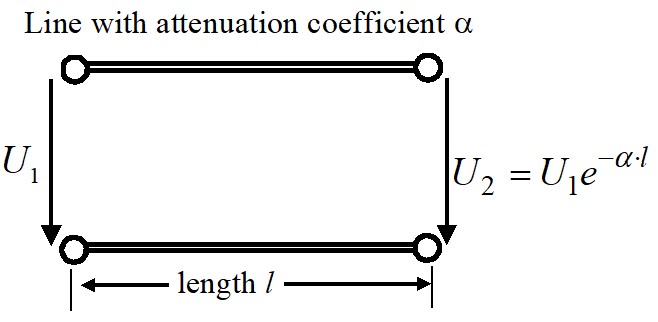
Figure 2-2: Voltage definition of a transmission line.
Voltage ratio: \( \frac{U_2}{U_1} = e^{-\alpha \cdot l } \) (2-1)
Voltage level in Np: \( L_u = \text{ln} \frac{U_2}{U_1} = \text{ln}(e^{- \alpha \cdot l }) = - \alpha \cdot l \) (2-2)
In case of a power ratio \( \frac{P_2}{P_1} = \frac{U_2^2/R_2}{U_1^2/R_1} \) from
\( L_u = \text{ln} \frac{U_2}{U_1} = \text{ln} \sqrt{\frac{U_2^2/R_2}{U_1^2/R1} \cdot \frac{R_2}{R_1} } = \frac{1}{2} \text{ln} (\frac{U_2^2/R_2}{U_1^2/R_1} \cdot \frac{R_2}{R_1} ) = \underbrace{\frac{1}{2} \text{ln} \frac{P_2}{P_1}}_{L_p \text{ in }N_p} + \underbrace{\frac{1}{2} \text{ln} \frac{R_2}{R_1}}_{\text{correction factor}} \) in Np (2-3)
The following power level results:
\( L_p = \frac{1}{2} \text{ln} \frac{P_2}{P_1} \) for R2 = R1 (2-4)
Only if the same resistance occurs at both points of the transmission system, that are to be compared (P = I²·R = U²/R), P ~ A² holds for the relationship between amplitude and power ratio. If this is not the case, a correction factor (resistance ratio) applies for the transfer from voltage to current or power ratio. Then, the values of voltage, current, and power level will differ a lot.
\( L_p = \text{lg} \frac{P_2}{P_1} \) in B or \( L_p = 10 \text{lg} \frac{P_2}{P_1} \) in dB, (2-5)
and by conversion
\( L_p = 10 \text{lg} \frac{P_2}{P_1} = 10 \text{lg}\frac{U_2^2/R_2}{U_1^2/R_1} = \underbrace{20 \text{lg}\frac{U_2}{U_1}}_{L_u \text{ in dB}} + \underbrace{10 \text{lg}\frac{R_1}{R_2}}_{\text{correction factor}} \) in dB
the corresponding voltage level:
\( L_u = 20\text{lg} \frac{U_2}{U_1} \) for R2 = R1 (2-6)
The following logarithm laws have been used:
\( log(a \cdot b ) = log(a) + log(b) \), \( log(a^b) = b \cdot log(a) \)
In practice, the power ratio most often is given in decibel.
\( L_p [\text{Np}] = \frac{1}{2} \text{ln} \frac{P_2}{P_1} = \frac{\text{ln} 10}{2} \cdot \text{lg} \frac{P_2}{P_1} = \underbrace{\frac{\text{ln} 10}{20}}_{0,1151}\cdot \underbrace{10 \text{lg} \frac{P_2}{P_1}}_{L_p \text{ in dB}} \) (2-8)
The comparison of coefficients gives the conversions
10 dB ≈ 1,151 Np and (2-9)
1 Np ≈ 8.686 dB. (2-10)
The abbreviations Np and B or dB can be converted into one another in the same way as units of quantities of the same kind.